
Flexitank vs Isotank: How to Ship Bulk Olive Oil
Published on July 6, 2026 · Updated on July 12, 2026 · 7 min
By the Virginia trading team · reviewed by Tarek Neffati, president
For the vast majority of bulk olive oil buyers, the flexitank is the default choice: 21 to 23 metric tons per 20-ft container, a brand-new single-use bladder and, in most configurations, the lowest landed cost per ton. The isotank earns its place in specific scenarios: recurring flows on the same lane, high-value sensitive lots, or a discharge site already equipped for tank containers. Drums and IBCs, meanwhile, remain the solution for fractional volumes. Here is how to decide, line item by line item.
The flexitank: the standard for food-grade bulk
A flexitank is a multilayer food-grade polyethylene bladder installed inside a standard 20-ft dry container. It is built for a single voyage: delivered new, fitted before loading, destroyed after discharge.
On capacity, the usual range is 21 to 23 tons of oil per container. At a density of roughly 0.916 kg/L, 22 tons works out to about 24,000 liters. That weight-to-volume ratio is one of the format's key strengths: you load an ordinary dry container, available everywhere, without tying up specialized equipment.
What the flexitank does very well
- Hygiene by design: the bladder is new and sealed. No cleaning to verify, no risk of cross-contamination from a previous cargo.
- Cost per ton: a standard container, no tank repositioning, no cleaning service. On most lanes, it is the most economical option above roughly twenty tons.
- Documentary simplicity: a food-contact compliance certificate for the bladder plus the seal are enough, where a tank container requires a full cleaning file.
Its real limitations
- Discharge has to be organized: you need a pump and a buffer tank able to take the entire lot. A flexitank does not allow split deliveries.
- Single use: the bladder is a consumable to be factored into cost, along with handling its disposal after emptying.
- Sensitivity to handling: loading and bracing must be carried out by a trained operator, and some shipping lines require approved bladders and certified installers.
The isotank: the reusable stainless steel tank
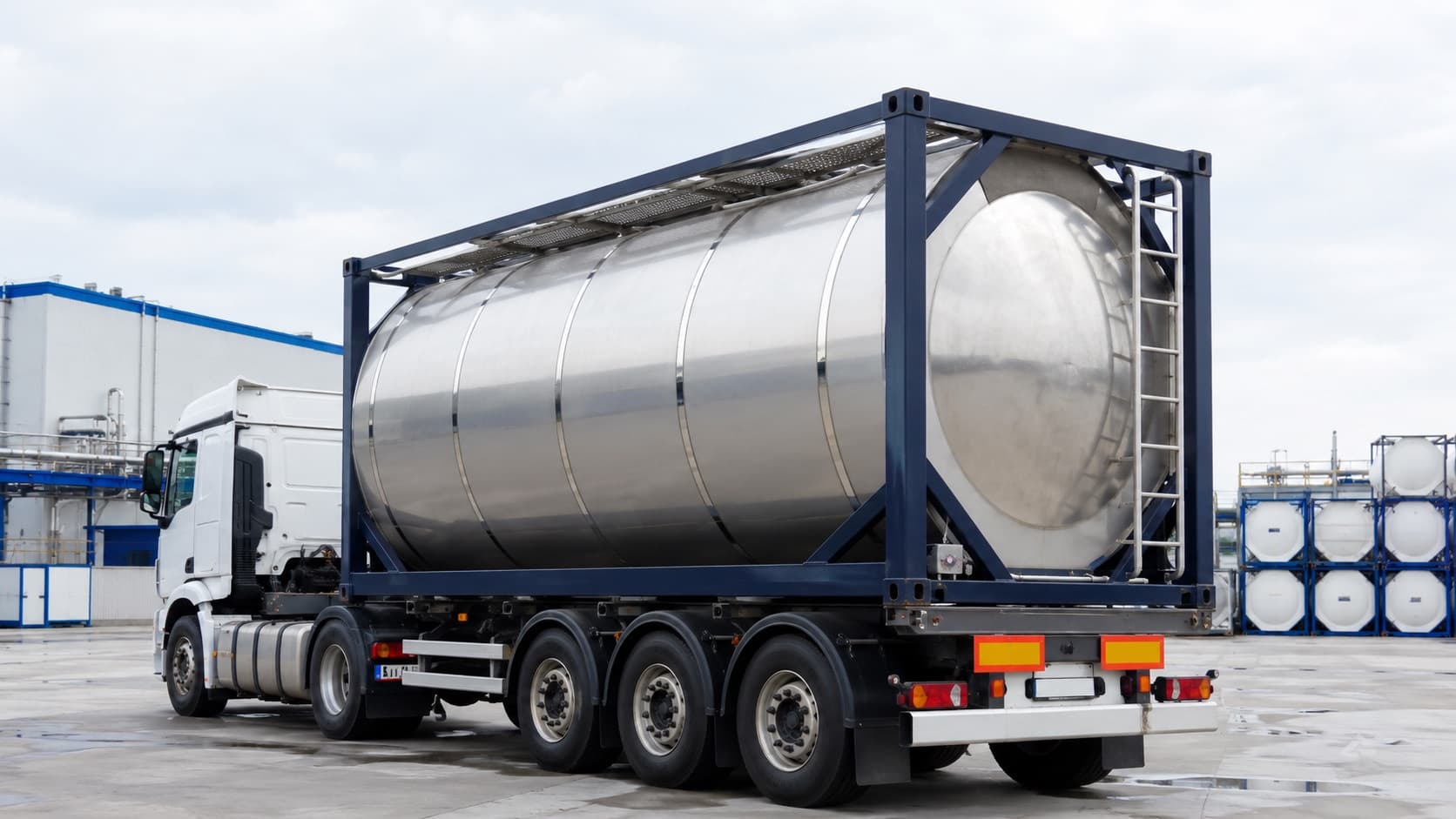
An isotank is a stainless steel tank mounted in a 20-ft ISO frame. Typical payload for olive oil: about 24 tons. It is multimodal equipment (sea, road, rail) and reusable, operated by specialized tank operators.
It makes sense in three situations: regular rotations between the same points, where the operator can optimize tank positioning; high-value lots for which the buyer wants a rigid stainless steel vessel end to end; and winter discharges in northern Europe, because olive oil solidifies at low temperatures and some tanks allow gentle reheating before emptying.
In return, the tank must be cleaned and must prove it: a cleaning certificate (ECD type) and traceability of previous cargoes are non-negotiable, since olive oil is only loaded after compatible food-grade products. Cost depends heavily on tank availability on the lane in question: on an unbalanced route, repositioning quickly drives up the cost per ton shipped.
Drums and IBCs: the second line
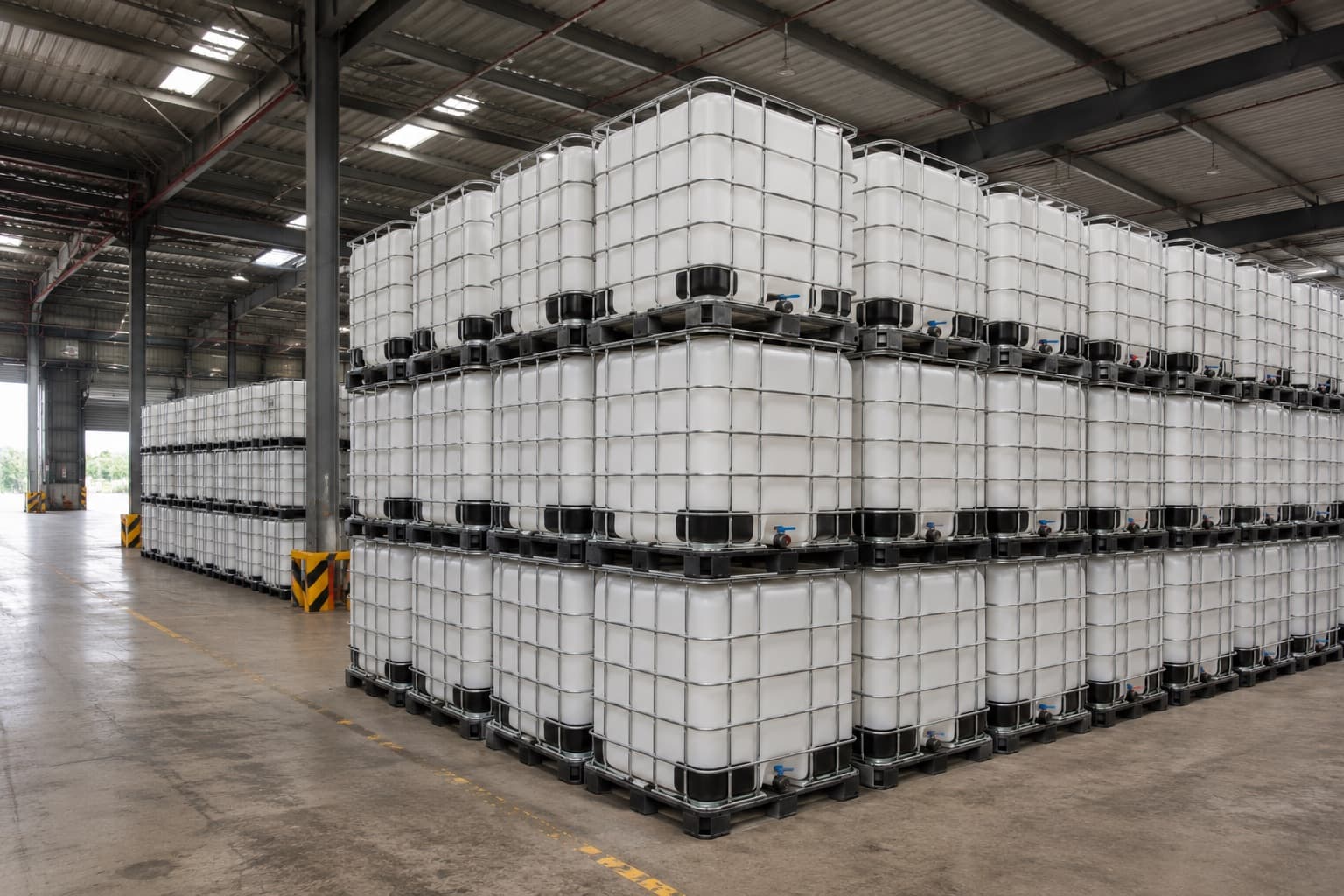
Steel or plastic drums and IBCs of about 1,000 liters keep their place for volumes below a full container load, multi-SKU orders and customers without discharge infrastructure. A 1,000-liter IBC holds about 916 kg of oil: the landed cost calculation must factor in the weight and price of the packaging, unit handling and the payload lost inside the container. Cost per ton is structurally the highest of the three formats, but it is also the only one that allows fractional distribution without any equipment.
Comparison table
| Criterion | Flexitank | Isotank | Drums / IBCs |
|---|---|---|---|
| Payload (20-ft basis) | 21 to 23 t | ~24 t | Reduced by packaging |
| Hygiene | New single-use bladder | Certified cleaning mandatory | New or reconditioned packaging |
| Cleaning file | None | Certificate + previous cargoes | Depends on packaging |
| Discharge | Pump + buffer tank | Standard fittings, reheating possible | Unit handling |
| Split deliveries | No | Limited | Yes |
| Cost per ton | Generally the lowest | Varies by lane | The highest |
Which format for which buyer profile
- Bottler or blender equipped with tanks: flexitank, unless a highly recurring flow justifies an isotank contract.
- Industrial buyer with procurement planned across the season: isotanks in rotation, negotiated with a tank operator, especially if the site already receives food-grade liquids in tank containers.
- Distributor or packer without tank storage: IBCs and drums, or private-label packaged product directly — see our bulk offer, which covers both approaches.
The arithmetic: the oil's value changes the answer
An illustration on a 22-tonne container. Suppose that once certified cleaning, repositioning and rental are factored in, the isotank comes out 40 to 60 € per tonne above the flexitank on your lane. On a standard oil at €3,400/t, that premium weighs 1.2 to 1.8% of a lot worth close to €75,000: the flexitank wins without debate. On an organic early harvest at €4,800/t, the same gap falls to 0.8–1.3% of a lot exceeding €105,000: the stainless vessel, winter reheating and the absence of leak risk then come at a modest margin against what is at stake. The rule is simple: the trade-off is made in percentage of the value carried and in cost of the casualty avoided, never in euros per container.
Insurance and average: the real Achilles heel
The textbook flexitank casualty is a leak — precisely what minimum cover does not indemnify. Buying CIF, the ICC's Incoterms 2020 only require the seller to take out Institute Cargo Clauses (C): fire, grounding, collision, general average — neither leakage nor contamination. For a food-grade liquid, insist on an all-risks policy (Clause A) that explicitly covers flexitanks: most insurers condition it on a certified bladder fitted by an approved installer. Keep general average in mind too: if the shipowner declares it after a major incident, every shipper contributes to the losses, and without insurance you must post a bank guarantee to release a container that is itself untouched.
Receiving a flexitank: the checklist
The bladder is single-use and discharge destroys the evidence: anything that needs recording must be recorded before pumping.
- Seals before opening: check the numbers against the bill of lading and packing list, photograph the closed doors.
- External inspection: oil traces under the chassis or at the door sill are a leak signal to document before any discharge.
- Counter-samples: draw at the start, middle and end of discharge, seal and retain; in a dispute, analysis will follow the International Olive Council methods.
- Weighbridge in and out: weighing full and empty establishes the received weight against the documents.
- Immediate reservations: any anomaly goes on the transport document the same day, with photos — once the deadlines pass, recourse against carrier or insurer lapses.
Common mistakes
- Comparing freight per container instead of landed cost per ton. Attractive tank freight can hide a cleaning charge, repositioning and a different payload. Bring everything back to cost per delivered ton — our calculators are built for exactly that.
- Neglecting discharge planning. An unavailable pump, an undersized buffer tank, a missed slot: demurrage costs more than the freight spread between two options.
- Accepting a tank without a complete cleaning file. Without a certificate and the list of previous cargoes, the quality risk is unacceptable for a food product.
- Forgetting temperature. Olive oil partially solidifies in the cold: a mid-winter continental discharge needs preparation (reheating, lead times).
- Locking in logistics before quality. The container never rescues a mediocre lot: demand the certificate of analysis before committing, as explained in our guide to reading a COA.
Bottom line
The flexitank remains the economical route for a full container, the isotank the route for recurring flows and high-value lots, drums and IBCs the route for fractional volumes — and the final call is made in percentage of the value carried. As a trader of Tunisian olive oil, Virginia loads in the format your receiving site can actually absorb: certified new bladder, tank with a verified cleaning file, or pallets, with the lot's COA sent before shipment. Request a quote describing your discharge equipment and call-off rhythm: we price flexitank and isotank side by side on your lane, in landed cost per tonne.
Read next
Logistics
Olive Oil Density: Converting Tons to Liters for Buyers
Reference density, ton-to-liter conversion tables and the effect of temperature: the practical guide to comparing and invoicing bulk olive oil correctly.
September 4, 2026 · 7 min read
Logistics
Ocean Freight for Bulk Tunisian Olive Oil: Book Early
Mediterranean port congestion and volatile freight rates are reshaping bulk shipping costs — what buyers should lock in before the 2026-2027 harvest.
August 17, 2026 · 7 min read

Tell us what you need.
Volume, grade, packaging, destination: describe your project and we'll get back to you within one business day with an offer at the best price — or the right questions.